When Banks Funded (Almost) Everything
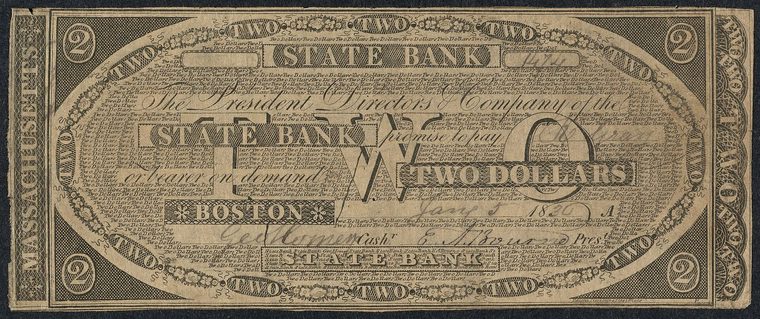
In Part I, we are going to see banks cycle through operating a “Wild West” of financing tools and into crisis, back to the “Wild West” and back to crisis. By the time we get through several boom-and-bust cycles, we get the creation of the Federal Reserve in 1913, which was designed to be a backstop for banks experiencing runs and to prevent future crashes. Given the Great Depression was triggered in 1929, which was after the formation of the Federal Reserve, we know how that worked out. But let’s start at the beginning, when banking was all about local relationships.
Chapter 1The Original Banking Model
The first banks in the United States were not what I would exactly consider conservative, as I do banks today. They were in fact pools of capital organized around the needs of the specific local community they were serving, and they funded just about everything.
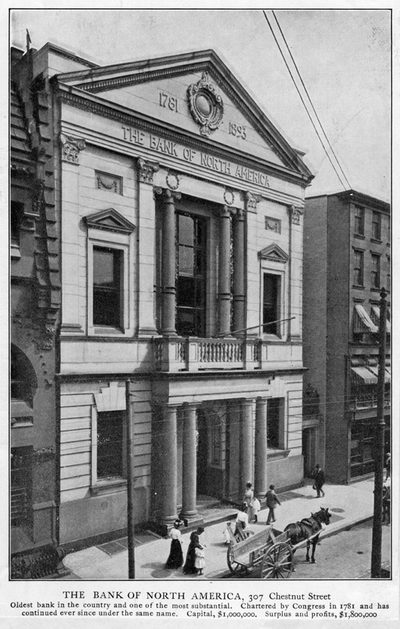
I am starting our history of regulated banking in the year 1781, when the Bank of North America was chartered in Philadelphia. The Bank of New York and the Massachusetts Bank followed not long after in 1784.1 From a handful of institutions at our country’s founding, banks started forming quickly as we approached the 1800s, and state legislatures started chartering banks at an accelerating pace. From 1820 to the eve of the Civil War in 1860, the number of banks grew from 327 to 1,562, and bank lending grew from $55 million to $692 million during that period.2 Each bank catered to the needs and assets of its state and, more relevantly, of its town. A bank’s shareholders, directors, and borrowers were substantially the same people: the merchants, millowners, and builders of a particular area. These stakeholders used the banking form to gather their neighbors’ capital and invest it in whatever the local economy was trying to build.
And they funded nearly everything. Textile mills in Massachusetts and Rhode Island. Turnpikes, toll bridges, and canal companies. Land development on every frontier the country opened. Railroads, as railroads emerged. Banks during this time would routinely renew short-term notes for years on end, converting nominal ninety-day paper into what was functionally permanent growth capital for enterprises that in some cases did not even have revenue.
The economic historian Naomi Lamoreaux, in her study of early New England banking, documented how these institutions actually operated: they loaned a large share of their funds to their own directors and to the extended kinship and merchant networks around them.3 Many people in banking today will recognize this type of lending as a restricted practice (Reg O), outside of certain disclosures and lending limits. But in the context of those times, these “insider lending” banks were engines of economic development. The bank was the mechanism by which a community financed its own industrialization, with underwriting conducted through personal knowledge of the borrower accumulated over years of proximity, and less through financial statements, which barely existed in many cases. Directors’ projects got funded because the other directors knew them and knew their business.
What we had at this stage in the history of banking is what resembles venture capital today. Some might argue that the insider status and proximity between “borrowers and lenders” in venture capital still exists today with access to funds concentrated in certain locales, but that is a conversation for a different paper. This was an allocation of capital to unproven ventures, on flexible terms, held through illiquidity toward a long-term payoff. While I would call that venture capital or private equity today, in 1830, it was called banking.
As history would go on to prove, there were several issues with this system. Considering the local nature of these banks, they were highly susceptible to price movements in crops and land, as well as accessibility of capital. Banks failed constantly. The Panic of 1837 helped tip the country into a depression that lasted into the 1840s, and the number of banks fell by more than 200 between 1840 and 1843. The leadup to the 1837 panic, as with most panics, saw tremendous growth. In 1830, there were 381 state banks with $115.3 million in loans outstanding, and by 1837, there were 788 state banks with $525.1 million in loans outstanding.4 But a collapse in cotton prices and the lapse of the charter of the Second Bank (see inset) led to the 1837 panic and a drop to 691 banks and $255 million in loans by 1843 (See Figure 3 below).
Banking Boom and Bust from 1830 to 1843
Number of banks and loans outstanding in the United States, 1830–1843. Gold marks 1837, the year of the panic.
But that is just one example. Figure 4 lists crashes between 1792 and 1907 with brief explanations on their causes.
American Financial Panics Between 1781 and 1913 and Their Causes5
Fourteen panics in 132 years: roughly one every nine years. Gold marks 1837 and 1907, the two panics discussed in this Part.
- 1792
Speculation in the new federal debt and bank scrip, with no brake on a selling cascade
- 1796–97
Frontier land speculation financed on thin credit; dependence on London finance
- 1819
Post-war land and commodity boom financed by rapid state bank note issuance
- 1837
Bank lending doubled after federal deposits left the Second Bank; cotton prices collapsed; Specie Circular of July 1836
- 1839–43
Overextended state banks and state-backed internal improvement debt
- 1857
Railroad overbuilding and land speculation; reserves pyramided in New York
- 1861
Sectional collapse of credit and uncertainty over Southern debts at the outbreak of war
- 1873
Railroad investment outpacing demand; European investors divesting American railroad bonds
- 1884
Speculative losses and fraud among interconnected New York institutions
- 1890
Securities price collapse and the Baring crisis transmitted through London
- 1893
Treasury gold reserves nearly halved; fear of suspended convertibility; rising loan defaults
- 1896
Continued gold-standard anxiety during the free-silver political fight
- 1901
Rival financier syndicates contesting control of the Northern Pacific
- 1907
Trust companies operating outside clearing-house discipline; strained money markets